
Most Trips Don’t Require Vaccines, But Many Travellers Are Missing The Basics…
A question I hear all the time is: “Do I need any vaccinations for my trip?” For most holidays, the answer is no. European beaches, North American cities, parts of Asia or the Caribbean rarely ask for anything beyond your usual jabs. Only a handful of countries, mainly in parts of Africa or South America, require something like a yellow fever certificate.
But here’s the thing. Even if your trip does not require specialist vaccines, many travellers are missing the basics – i.e. our standard childhood vaccinations are not up-to-date. Booster shots get forgotten, childhood jabs were missed, or life simply got in the way. Being up to date on routine UK vaccinations is the easiest way to protect yourself both at home and on holiday. Busy airports, planes, cruise ships, and cities can all be hotspots for germs.
Let’s break it down so you can travel confidently and stay healthy, using advice from the NHS and TravelHealthPro.
Check Your Routine Vaccinations
Before planning that dream safari or city break, start at home. The UK’s routine vaccination schedule protects against illnesses that can show up anywhere. Adults need boosters too, and I see many travellers surprised to find they are not fully covered. For example, measles is on the rise worldwide, yet many people born before the 1990s only had one MMR jab when two are recommended.
Here’s what every adult traveller should check:
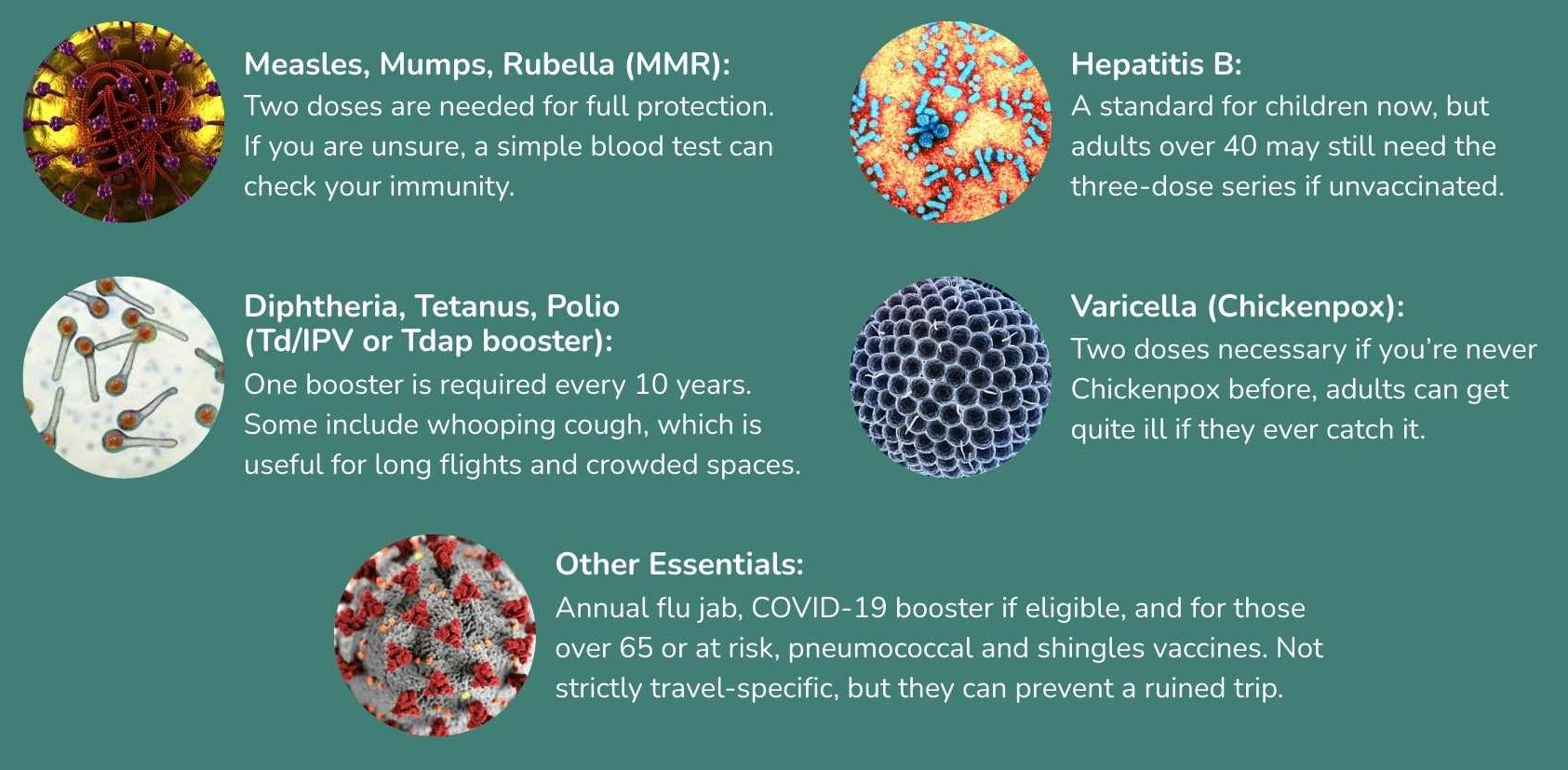
Tip: Book a GP appointment six to eight weeks before you travel to review your vaccination record. It is free, quick, and could save a lot of stress. Being up-to-date helps protect you and others.
Extra Vaccinations For Certain Destinations
Some places require or recommend extra jabs. These are not usually mandatory, but they can prevent serious illness. The NHS may provide some for free if risk-assessed, like hepatitis A or typhoid. Others are private, costing around £50 to £100 per dose. Check TravelHealthPro for country-specific advice, as recommendations can change with outbreaks.
Here are the ones I see most often recommended:
Hepatitis A protects against liver infection from contaminated food or water, and is recommended if you’re travelling to Asia, Africa, and Latin America. The NSH offers this vaccine for free if a risk assessment determines that you need one.
Typhoid guards against bacterial fever from poor hygiene, recommended if you’re travelling to South Asia or Africa. Provided for free on the NHS if you need it.
Yellow Fever vaccines protect you against a severe mosquito-borne virus, required if you’re travelling to such countries as Brazil and Nigeria. The NSH does provide the Yellow Fever vaccine, but it’s not available for free and must be obtained from a private health clinic or specialist GP surgery. Once you’ve paid and received the vaccine, you’ll receive vaccine certification. This is the main vaccination we see that is mandatory!
Rabies are fatal if untreated, so pre-exposure shots are recommended for those going on adventures that include animals, like safaris or if you’re travelling to places such as Rural Asia or Africa. It should be noted that post-bite treatment abroad can be unreliable, so the pre-exposure vaccine before you travel is the safest option. The NHS only offers the rabies vaccine for free for post-exposure and to those in high-risk professions (vets, bat handlers, etc), so you’ll have to pay for the pre-travel, three-dose course privately.
Prevents the contraction of bacterial meningitis when visiting crowded or epidemic areas. This vaccine is usually required for Hajj or Umrah (religious pilgrimage to Mecca), or if you’re travelling to countries inside of Africa’s “meningitis belt”. The NHS doesn’t typically offer this vaccine for free if it’s for travelling so you’ll have to go private for it, however it may be prescribed for free if it’s needed for Hajj.
Other vaccines may include Japanese encephalitis for rural Asia, tick-borne encephalitis in European forests, and cholera for high-risk trips. These are usually private. Always consider your personal health. Pregnant travellers or those with medical conditions may need tailored advice
The best trips start with a little preparation. Most holidays need no extra vaccines, but checking your routine jabs is essential. It is not about fear. It is about peace of mind.
This article is written for guidance only – it is essential that you double-check your vaccination status with your doctor and any destination health requirements – this is a good website to use TravelHealthPro.
Gilly Bachelor