
Urgent Review Call as Easter EES Rollout Raises Delay Concerns
By Gilly Bachelor, Travel Expert
If you follow our updates, you’ll know this isn’t a new conversation.
Last year, I was invited onto TRT World Roundtable alongside Simon Calder and Sean Tipton from ABTA to discuss the upcoming European border changes and what they mean for UK holidaymakers.
At the time, I said clearly that the principle of the new Entry Exit System is understandable. The concern is operational readiness.
That concern is now being echoed loudly across the aviation industry.
What Is Happening Now
The EU’s new biometric Entry Exit System, known as EES, is due to be fully operational by the week of Easter Monday, with full implementation expected from 10 April 2026.
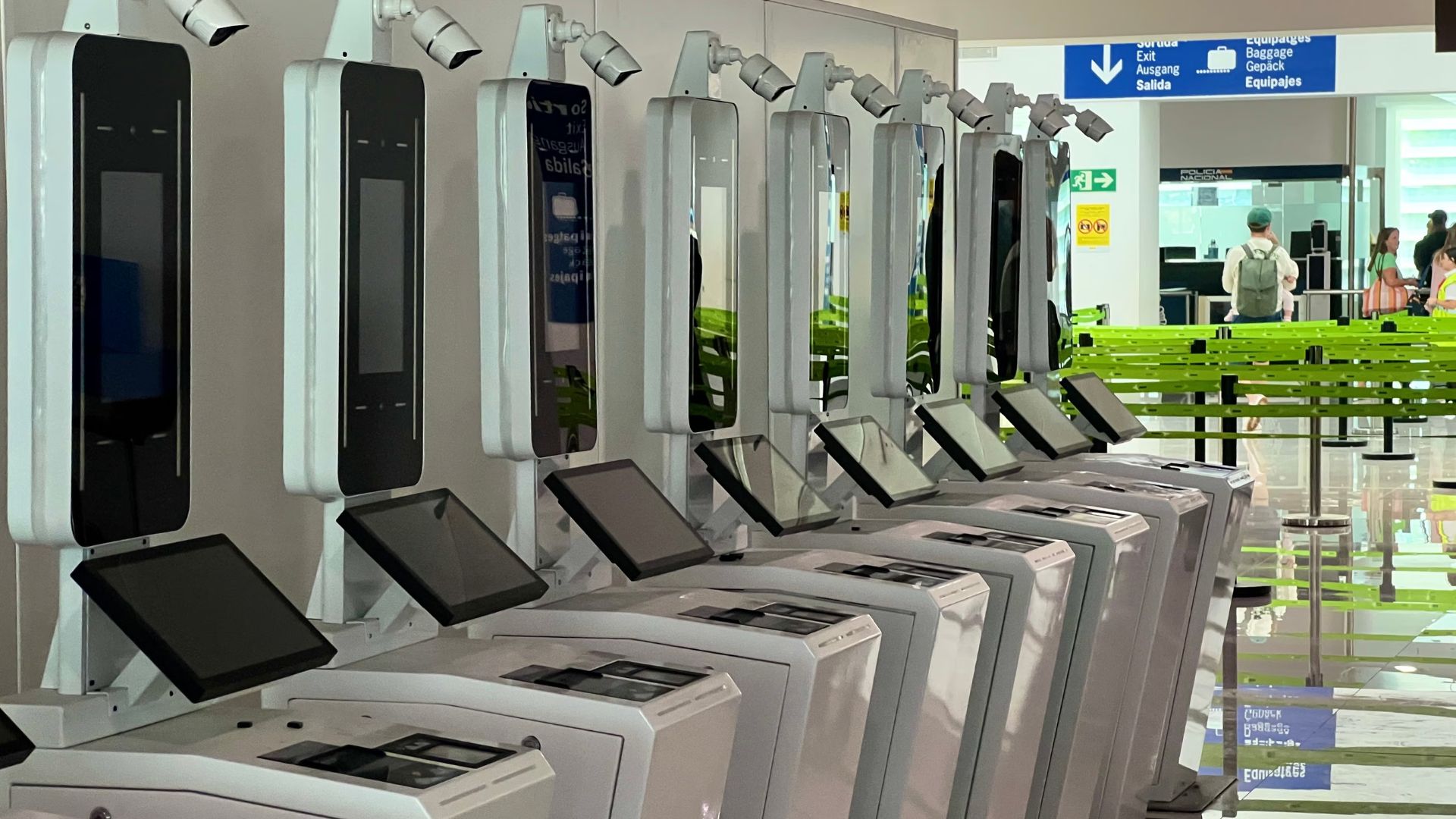
Under EES, UK passport holders and other non-EU travellers entering the Schengen Area will have facial images and four fingerprints captured digitally. The system replaces traditional passport stamping and records precise entry and exit times.
Since the phased rollout began, delays have already been reported.
Last week, the International Air Transport Association joined ACI Europe and Airlines for Europe in calling for an immediate review of the implementation timetable. They warned of queues of four hours or more during peak summer if technology issues and staffing shortages are not resolved.
ACI Europe reported a 70% increase in processing times at airports in December when only 10% of non-EU travellers were being registered biometrically. There have also been reports of system outages and configuration problems, alongside limited uptake of the pre-registration app.
The Foreign, Commonwealth & Development Office has updated its advice, stating that travellers should be prepared to wait longer than usual at the border.
Why This Matters More Than Just Queues
From my perspective, this is not simply about inconvenience.
It is about accuracy.
Under the 90 day in any 180 day rule, UK passport holders can only spend 90 days within a rolling 180 day period in the Schengen Area. The new system will digitally calculate that allowance.
If, during busy periods, travellers are occasionally waved through without full biometric processing, it becomes absolutely essential to retain proof of travel such as boarding passes. If your entry or exit is not properly recorded, the system may incorrectly show you as having overstayed. That can lead to fines, entry bans or difficulties re entering Europe in future.
This is why we have been advising clients for months to plan carefully and keep documentation.
What We Are Advising Clients Now
EES is being introduced across 29 Schengen countries, including EU member states as well as Switzerland, Norway, Iceland and Liechtenstein. Ireland and Cyprus are not part of Schengen.
For Easter and summer travel we are advising clients to:
- Allow additional time at airports, ferry ports and Eurostar terminals.
- Expect longer queues during peak departure days
- Retain boarding passes and proof of travel
- Monitor official guidance in the weeks before departure
The system is designed to modernise border management. In time, it should create greater clarity and automation. But large scale structural changes rarely bed in without friction.
As someone who has been closely involved in industry discussions and media analysis of these changes, my view remains consistent. Preparation is everything. If you understand the system, allow time and keep documentation, you reduce risk significantly.
We will continue to monitor developments closely and brief our clients ahead of departure. The objective is simple. No surprises at the border.
If you need more support, we run a free travel advice service and would be happy to answer any questions that you have. You can book a free travel advice meeting here.